ToyoMotors Auto Care · North Phoenix, AZ
Hybrid Battery Replacement in Phoenix
Phoenix Hybrid Battery Repair, Recondition or Hybrid Battery Replacement?
Maybe you've noticed one or more of these on your hybrid:
- It feels sluggish and doesn't pull the way it used to, especially onto the freeway or up a hill.
- Your fuel economy has dropped, even though you drive the same way.
- A hybrid system or check engine light is on.
- The battery gauge jumps quickly between full and empty, or the gas engine seems to run all the time.
- Another shop told you the hybrid battery needs replacing.
Any of these can point to a worn hybrid battery, but they can also come from a sensor, the battery cooling fan or another part of the hybrid system. That's why we always test first and recommend second.
Does ToyoMotors recondition hybrid batteries?
No. ToyoMotors no longer reconditions hybrid batteries, because in our experience the repair doesn't last. When a battery is truly worn out, we replace it with a new factory unit, and when you do the math, it is cheaper in the long run. It isn't for lack of tools or know-how: for years we reconditioned batteries ourselves. Our shop has about $30,000 worth of hybrid battery testing and cycling equipment, and we've spent many years taking these packs apart, testing them and putting them back together. That experience is exactly why we stopped.
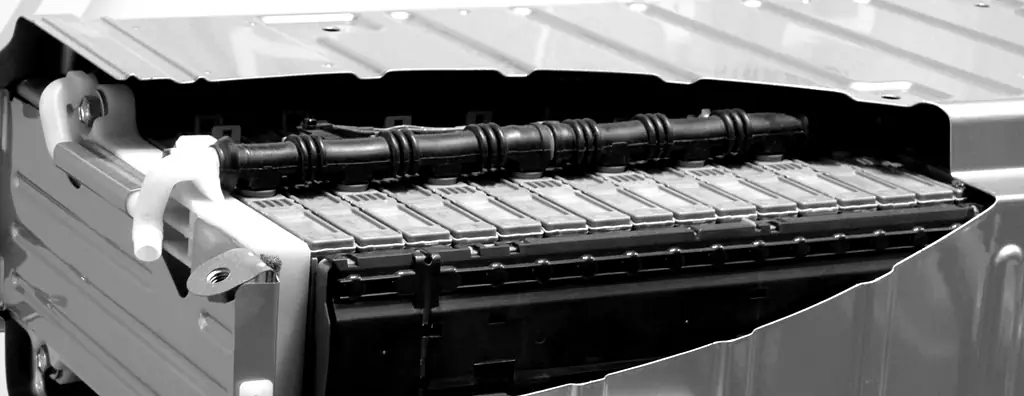
A Prius battery is a chain of nickel-metal hydride (NiMH) modules wired in a row. Each module is a small battery of its own, and the whole pack is only as strong as its weakest one. When one module starts to fail, the others in the chain have to work harder, and the pack falls out of balance.
Reconditioning slowly charges and drains every module several times on special equipment. It does some real good. A hybrid keeps its battery in the middle of its charge range, and over time that causes voltage depression: the modules' voltage sags, so they seem to hold less than they really do. People often call this the battery's “memory.” Deep cycling clears it, rebalances the modules and shows which ones are bad. On the test bench, the capacity often comes back looking healthy.
How long does a reconditioned hybrid battery last?
In our experience, often not long. We regularly saw batteries that passed every capacity test after reconditioning lose another module within six to twelve months, sometimes sooner. The science explains why.
The real problem is internal resistance, meaning how hard it is for current to get in and out of a module. As NiMH modules age, the liquid electrolyte inside slowly dries out, and the metal parts corrode and break down. Resistance rises, and no amount of charging and draining reverses it. A slow capacity test on the bench barely notices high resistance. In the car, though, the battery is pushed hard every time you accelerate or brake, and that's where a high-resistance module sags, heats up and falls behind. Phoenix heat makes this happen faster.
That's why we install a new factory battery instead. Every module starts out fresh and matched, and it's built to the manufacturer's specs for your car. It costs more up front, but we stand behind it with The 5-Year/50,000-Mile Warranty on new hybrid battery installs — a repair built for years, not months. For the full buyer's guide, see Should I buy a reconditioned hybrid battery? and our owner's guide, Should I recondition my hybrid battery?.
Frequently asked questions
If reconditioning brings the capacity back, why doesn't it last?
Capacity and internal resistance are two different things. Reconditioning can restore usable capacity, but it can't undo the wear that raises resistance: electrolyte dry-out, corrosion and swelling inside each cell. Battery researchers name rising resistance from electrolyte dry-out as the most common way NiMH cells fail. Every deep discharge also adds a little wear of its own.
Does Arizona heat really matter for hybrid batteries?
Yes. Heat speeds up corrosion inside NiMH cells, raises how fast they lose charge while the car is parked, and wears out the separators between their layers. The modules in the middle of the pack also run hotter than the ones at the ends. A clean battery cooling fan and a pack of evenly matched modules are your best protection in Phoenix summers.
Can't you just replace the one bad module?
In a typical 28-module Prius pack, one new or used module sits next to 27 aged ones with different resistance. The car's computer only watches modules in pairs, so a mismatch can hide until another module fails. That's the repeat-repair cycle we want to spare you.
Do the math
Here’s what you spend, the expected life, and what that works out to per year and per month.
Published 2026 example prices, 2014 Prius
New factory Toyota battery
- You spend
- Approximately $3,600
- Expected life
- 10 years
- Cost per year
- about $360
- Cost per month
- about $30
Reconditioned / remanufactured
- You spend
- About $1,399installed
- Expected life
- Usually about 1 year
- Cost per year
- about $1,399
- Cost per month
- about $117
New aftermarket NiMH
- You spend
- About $1,880DIY kit
- Expected life
- 1–2 years
- Cost per year
- about $940–$1,880
- Cost per month
- about $78–$157
Aftermarket lithium-ion
- You spend
- About $1,365pack only
- Expected life
- 1–2 years
- Cost per year
- about $683–$1,365
- Cost per month
- about $57–$114
ToyoMotors Auto Care · 2818 E. Bell Rd, Phoenix
Nearly twice the dealer warranty.
Example 2026 prices for a 2014 Prius. Other options vary in what’s included.
Recondition vs. replace at a glance
| Reconditioned battery | New factory battery | |
|---|---|---|
| The modules | Mostly the original, aged ones | All new |
| How long it lasts | Limited, because the old modules keep aging | Many years of trouble-free driving |
| Upfront cost | Lower | Higher |
| Long-term value | Can mean repeat repairs and downtime | The better value, in our experience |
Check your warranty first
Before you pay for anything, find out whether your hybrid battery is still under the manufacturer's warranty. For example, Toyota says hybrid batteries in its 2020 and newer models are covered for 10 years or 150,000 miles, whichever comes first.
Certified hybrid care in North Phoenix
ToyoMotors is a Certified Arizona Green Business, and our manufacturer-specific expert master technicians take care of everything from oil changes and spark plugs to complete hybrid battery replacement. Learn more about our hybrid battery repair advice.
We take care of most hybrid makes and models, including the Toyota Prius, Camry Hybrid and Highlander Hybrid, Lexus CT, NX, RX, ES, GS and LS hybrids, Honda Civic Hybrid, Insight and Accord Hybrid, Ford Fusion and Escape Hybrid, Chevrolet Malibu, Tahoe and Silverado Hybrid, GMC Yukon and Sierra Hybrid, and Nissan Altima Hybrid.
Want the full story? Read Should I Buy a Reconditioned Hybrid Battery? and our owner's guide, Should I Recondition My Hybrid Battery?.
Our Certified Hybrid Technicians, utilizing our high-tech testing equipment, offer two levels of testing. Here's how it works: Toyota and Lexus hybrids start with our free* Level 1 Quick Test. If it passes, you're good to go. If it doesn't, we move on to the Level 2 Hybrid Battery Test for a complete picture. All other makes start at Level 2. The Level 1 Quick Hybrid Battery Test is FREE*; the Level 2 Hybrid Battery Test is $97. Call (602) 971-8137 or book an appointment online.
More hybrid help
Other hybrid trouble? See hybrid repair or Prius repair in Phoenix. A clean battery cooling fan also helps a new battery last in Phoenix heat. For everything else on your Prius or other Toyota, see Toyota repair in Phoenix.